
China on Monday said Sri Lanka has allowed its satellite and missile tracking ship to berth at the Hambantota port on Tuesday, but declined to reveal details of talks with Colombo leading to the bankrupt island's government reversing its earlier stand to defer the high-tech vessel's entry.
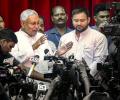
Various indicators make it amply clear that there are grave challenges facing the new government of Chief Minister Nitish Kumar, reports Indivjal Dhasmana.

India's services sector activity moderated further in January as new business rose at a noticeably slower rate amid the escalation of the pandemic, reintroduction of restrictions and inflationary pressures, a monthly survey said on Thursday. The seasonally adjusted India Services Business Activity Index fell to 51.5 in January, down from 55.5 in December, pointing to the slowest rate of expansion in the current six-month sequence of growth. For the sixth straight month, the services sector witnessed an expansion in output.

Essar group on Friday announced the signing of a USD 2.4 billion (Rs 19,000 crore) deal to sell certain ports and power infrastructure to ArcelorMittal Nippon Steel in one of the largest post-pandemic merger and acquisition deals in India. In a statement, the Ruia-run firm said the deal also envisages a 50-50 joint venture between Essar and ArcelorMittal for building a 4 million tonnes a year LNG import terminal at Hazira in Gujarat. Without giving details, it only identified certain ports and power infrastructure that are primarily captive to operations of the Hazira steel plant, which was acquired by ArcelorMittal Nippon Steel (AM/NS) in 2018-19, as part of the deal.

The faster-than-expected rise in interest rates by the US Federal Reserve (US Fed) shook global financial markets in early 2022. And now the ongoing war between Russia and Ukraine has lifted commodity prices, with Brent crude oil hitting a 14-year high of $139 a barrel in intraday trade. All these developments have sent the equity markets across the world into a tailspin.

The attack did not result in any human losses, it said, adding that the remnants of the intercepted and destroyed ballistic missiles fell in separate areas around Abu Dhabi.

The RBI's mistake may have been in interpreting its mandate to maintain retail inflation at 4%, with 2% leeway in either direction, as being a mandate that permitted it to do nothing even when inflation was at or near the upper bound of 6%, observes T N Ninan.
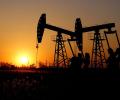
The wholesale price-based inflation in February rose to 13.11 per cent on hardening of prices of crude oil and non-food items, even though food articles softened. After two months of mild easing, WPI inflation accelerated in February and remained in double digits for the 11th consecutive month, beginning April 2021. WPI inflation last month was 12.96 per cent, while in February last year, it was 4.83 per cent. The rise in crude oil and natural gas prices after the Russian invasion of Ukraine, beginning February 24, has put pressure on the wholesale price index, even though food articles saw softening across categories of vegetables to pulses to protein-rich items.
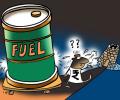
Inflation in the 'fuel and power' basket in December slumped to 8.38 per cent, nearly half of 16.28 per cent.

The wholesale price-based inflation shot up to an all-time high of 10.49 per cent in April, on rising prices of crude oil and manufactured items. Also, a low base of April last year contributed to the spike in inflation in April 2021. The WPI inflation was 7.39 per cent in March 2021, and (-) 1.57 per cent in April 2020. This is the fourth straight month of uptick seen in the wholesale price index (WPI)-based inflation.

Ppolitical experts in Colombo said the ministers came under intense pressure from the public over the government's alleged "mishandling" of the economic crisis, triggered by the shortage in the foreign exchange reserve.

The rise was due to a sharp fall in prices, which spurred demand.

RBI in its policy review last month kept interest rates unchanged and said it sees an upside risk to inflation.

Stating that growth impulses and the fast-moving indicators are strong, Reserve Bank Governor Shaktikanta Das on Wednesday exuded confidence of the economy clipping at the projected 9.5 per cent this fiscal. Giving all the credit for the faster-than-expected recovery of the economy to the government, Das said the central bank has only been supporting the government in reviving the economy ravaged by the pandemic. Citing a slew of measures the government has taken since the pandemic struck in March 2020, the governor specifically mentioned tax cuts on fuels, tax resolution for the telecom sector, annulling of the retro tax legislation, sale of Air India, plans to sell some of the public sector banks and PLI scheme as the major reforms and growth-drivers bearing fruits now.
India's services sector activity continued to expand in September, supported by favourable underlying demand amid the easing of COVID-19 restrictions, but lost some momentum from August's 18-month high level, a monthly survey said on Tuesday. The seasonally adjusted India Services Business Activity Index fell from 56.7 in August to 55.2 in September, but remained well above its long-run average. "Despite easing from August, the rate of expansion was marked and the second-fastest since February 2020," the survey said.
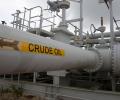
Retail inflation hit an eight-month high of 6.07 per cent in February, remaining above the RBI's comfort level for the second month in a row, while wholesale price-based inflation soared to 13.11 per cent on account of hardening of crude oil and non-food item prices, government data showed on Monday. The previous high for retail inflation was 6.26 per cent in June 2021. The consumer price index (CPI) based retail inflation, which is taken into account by the Reserve Bank of India (RBI) while deciding its monetary policy, rose mainly because of costlier food items, as per the data released by the National Statistical Office (NSO).
India Inc on Friday said Prime Minister Manmohan Singh's assertion that the government will not impose capital controls, although reassuring to investors, must be supplemented with tough reform measures.

The wholesale price-based inflation rose to an eight-month high of 1.48 per cent in October, as manufactured products turned costlier. The WPI inflation was 1.32 per cent in September and zero per cent in October last year. This is the highest level of wholesale price index-based (WPI) inflation since February when it was 2.26 per cent.

The President said he made the decision in consultation with European allies but added they may not be in a position to join the US in banning Russian energy imports.

Prime Minister Narendra Modi was not present at the all-party meeting convened by the government.
Inflation in food articles during May stood at 1.13 per cent, as against 2.55 per cent in April.

India's industrial production contracted by 3.6 per cent in February, official data showed on Monday. According to the Index of Industrial Production (IIP) data released by the National Statistical Office (NSO), manufacturing sector output declined by 3.7 per cent in February 2021. Retail inflation rose to 5.52 per cent in March, mainly on account of higher food prices, government data showed on Monday. The consumer price index (CPI) based retail inflation stood at 5.03 per cent in February.

A single application and a plethora of services for passenger cars - that is what myTVS, a brand that operates under Ki Mobility Solutions and is part of the TVS family, is set to bring to customers, in a bid to disrupt the concept of "super apps" in India. Starting July 15, myTVS will launch its connected car platform or super app called myTVS Life360 for aftermarket passenger cars. Through it, customers will be able to avail themselves of a range of services like maintenance, diagnostics, roadside assistance, accessories, payments, insurance, and so on.

India's services sector remained in contraction territory for the third straight month in July, as business activity, new orders and employment declined further largely due to the COVID-19 pandemic and local restrictions, a monthly survey said on Wednesday. The seasonally adjusted India Services Business Activity Index rose from 41.2 in June to 45.4 in July, but was stuck in the red due to subdued demand conditions amid the COVID-19 crisis. In Purchasing Managers' Index (PMI) parlance, a print above 50 means expansion, while a score below 50 denotes contraction.

IOC chief said he believed more than 80 per cent of residents of the Olympic Village would be vaccinated or booked for vaccination ahead of the Games
The non-food component in the price basket will continue to keep inflation at a high level and result in a "long pause" in interest rates, a foreign bank said on Wednesday. The central bank is likely to pare the pandemic-driven emergency response as well, the report by Singaporean lender DBS said. It can be noted that the high inflation driven by the food prices has forced the RBI to go for a status quo in rates for the three consecutive reviews of the bi-monthly policy meetings, even as growth continues to be in the negative territory.

The cheque truncation system, which is currently operational at the major clearing houses of the country, has stabilised well and it has made large efficiency gains: RBI
.jpg)
Declining prices of food items like vegetables pulled down retail inflation to 5.59 per cent in July, bringing it back within the RBI's comfort zone after two months, official data showed on Thursday. The retail inflation based on the Consumer Price Index (CPI) had remained above 6 per cent during May and June. The government has mandated the RBI to maintain retail inflation at 4 per cent, with a margin of 2 per cent on either side. The CPI based inflation stood at 6.26 per cent in June 2021 and 6.73 per cent in July 2020.

'In the overall global portfolio, India's weighting has come down in the past seven months.'
Cheque payments will be safer; the limit for contactless card transactions hiked.
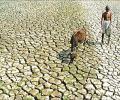
Emissions would still keep rising till 2030, and the path towards global warming would improve to 2.7c.

The country's gross domestic product (GDP) growth is likely to be 8.8 to 9 per cent in the current financial year, driven by agriculture and industry sectors, Care Ratings said in a report. The country's economy had contracted by 7.3 per cent in fiscal 2020-21. The agency said the outlook for the Indian economy on almost all counts in FY22 would look seemingly better than FY21 on account of the negative base effect.

Inflation in food articles during June stood at 2.04 per cent, as against 1.13 per cent in May.

If you use customised cards that suit your lifestyle needs, you could also end up availing of a variety of deals, rewards, and discounts.
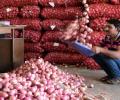
Vegetable inflation softened to 24.76 per cent in June, down from 33.15 per cent in the previous month. Inflation in potato was (-) 24.27 per cent, against (-) 23.36 per cent in May.

Two aborted missions, three different ministers, multiple rule changes and two decades later, Indian taxpayers will no longer have to pay Rs 20 crore per day to keep the loss-making Air India flying. While opposition Congress expectedly attacked the decision as selling the family silver, DIPAM secretary Tuhin Kanta Pandey said what Tata is getting is not a cash cow but an airline which is bleeding where money needs to be pumped in to refurbish obsolete aircraft and dust up strangled ones while being unable to touch any employee for one year and only be able to resize staff after paying a VRS. "It won't be a very easy task there. Only advantage is they (new Air India owner) are paying the price which they think they can manage. "They are not taking the excessive debt accumulated to fund years of losses. We are continuing it as an ongoing concern.... This process has also saved huge amount of taxpayers money going forward," Pandey told PTI.
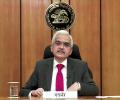
'There are some high-frequency indicators where uptick is visible and some where it is not'

"The government recruitment is frozen. Where are the jobs?" the minister said.

We have our own problems for sure and they are not trivial, but for now, our economy is in not too bad a shape, our politics is as personality-driven and authoritarian as that of most countries in the world. We must make the best of what we have and not be excessively unhappy looking at the grass on the other side of the septic tank which may not be greener after all!, observes Shreekant Sambrani.

With decline in number of fresh COVID-19 cases and easing of restrictions, the country's gross domestic product (GDP) will grow at 8.5 per cent in FY2021-22, according to credit rating agency Icra Ratings. It expects the gross value added (GVA) at basic prices (at constant 2011-12 prices) to grow at 7.3 per cent in FY2022. "The impact of the second wave of COVID-19 and the ensuing state-wise restrictions was seen across a variety of high frequency indicators in April-May 2021.
